Every winter, when the fields of Dinajpur turn quiet after harvest and the nights grow long and clear, the village of Kantanagar comes alive with light, music, and devotion. This is the time of Rash Mela at the Kantajew (Kantaji) Temple—one of the most vibrant religious and cultural festivals of northern Bangladesh.
Sacred Origins
Rash Mela is rooted in Vaishnava tradition and commemorates Rasa Lila, the divine dance of Lord Krishna with Radha and the gopis under the full moon. At Kantajew Temple, dedicated to Krishna, the festival holds deep spiritual meaning. Devotees gather to remember not just a mythological event, but an ideal of divine love, harmony, and joy.
The celebration usually takes place on the full-moon night of Agrahayan (November–December), aligning ritual time with the agricultural calendar of Bengal.
Temple to Fairground
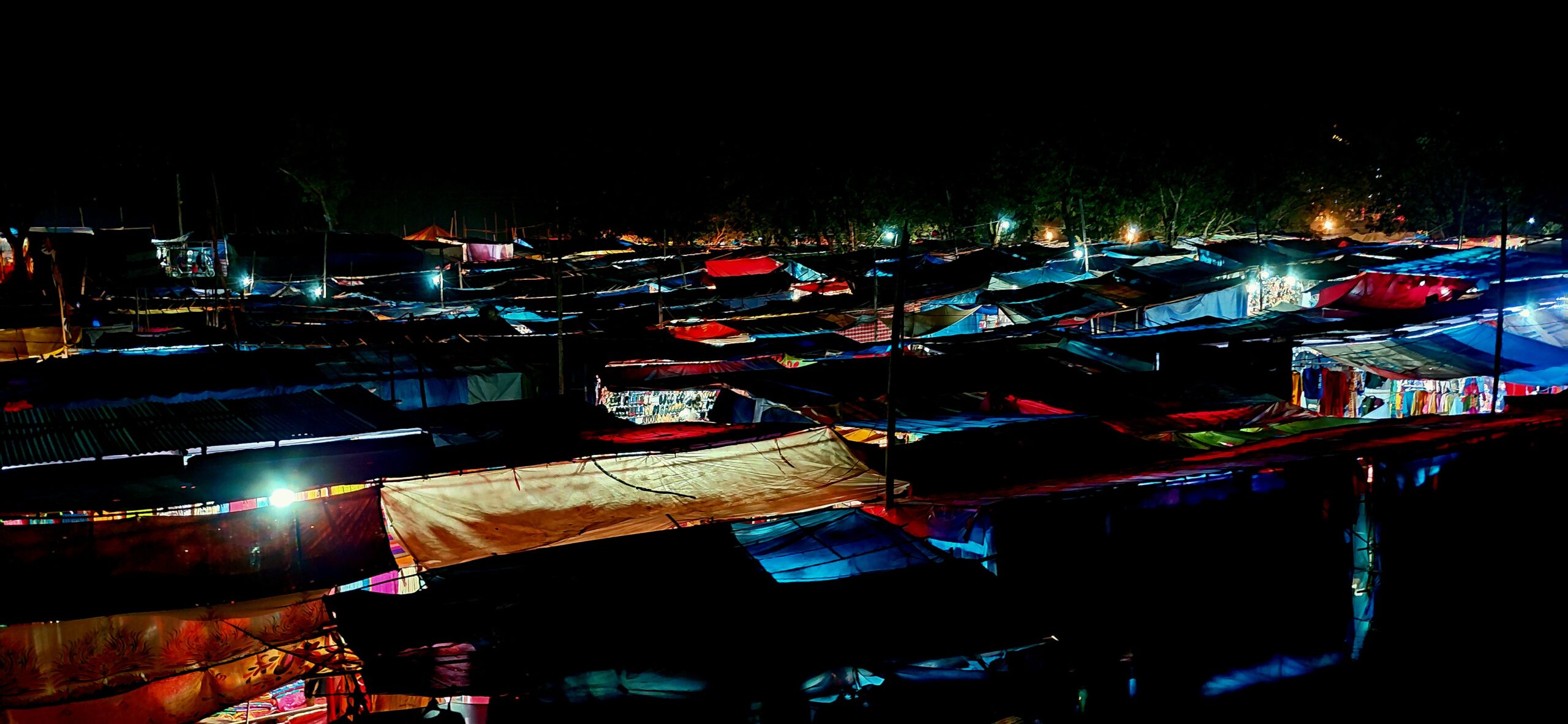
What begins as a night of prayer inside the temple gradually expands into a vast public fair surrounding it. Lamps and electric lights outline the terracotta walls, while kirtan (devotional songs) and recitations fill the air. As evening deepens, thousands of visitors—devotees, villagers, travelers, and tourists—pour into Kantanagar.
Outside the sacred enclosure, the Rash Mela unfolds as a true Bengali mela:
- Stalls selling clay toys, sweets, bangles, and handicrafts
- Ferris wheels and wooden merry-go-rounds
- Folk music, jatra, and rural performance traditions
- Temporary markets run by traders from across North Bengal
The boundary between worship and celebration becomes fluid, just as it has been for centuries.
Social and Cultural Meaning
The Rash Mela of Kantajew Temple is more than a Hindu religious festival. For Dinajpur, it is one of the largest annual gatherings, cutting across religious and social lines. Muslims, Hindus, and people from other communities attend—some to pray, others to trade, watch, and participate in the shared rhythm of festivity.
In a region shaped by agrarian life, the Mela also marks seasonal transition—from harvest to winter rest—making it a communal pause, a shared exhale.
Memory, Continuity, and Change
Historically, the Rash Mela was supported by the Dinajpur Raj, drawing performers and traders from far beyond the district. While the scale and form of the festival have changed with time—electric lights replacing oil lamps, loudspeakers replacing akharas—the core spirit remains.
The terracotta walls of the Kantajew Temple, carved with stories of Krishna, stand as a silent backdrop to living tradition. Each year, new memories are layered over old stone and clay.
A Festival that Holds the Past
In an age of shrinking public spaces and divided calendars, the Rash Mela of Kantajew Temple continues to offer something rare: a night where devotion, leisure, economy, and memory coexist.
Under the winter moon, among lights and crowds, the temple returns to what it has always been—not just a monument of the past, but the heart of a living cultural world.