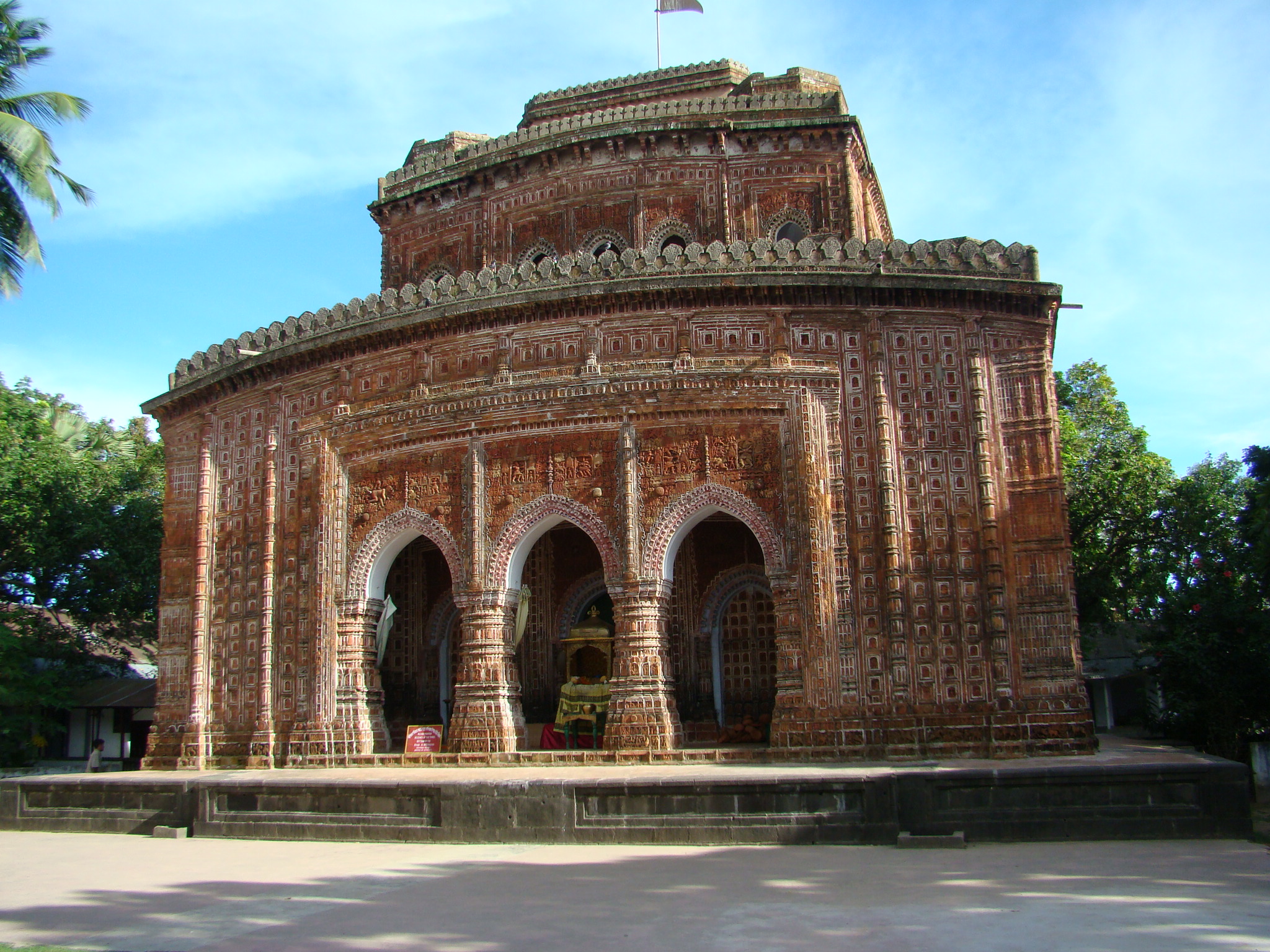
Rising from the quiet countryside of Dinajpur, the Kantajew Temple—popularly known as Kantaji or Kantanagar Temple—is one of the most extraordinary Hindu monuments in Bangladesh. Celebrated for its breathtaking terracotta artistry, the temple stands as a peak expression of late-medieval Bengal architecture and devotion.
Location and Setting
The temple is located in Kantanagar village, about 20 kilometers north of Dinajpur town. Set amid fields and ponds, the site feels deliberately removed from urban bustle—an environment that accentuates the monument’s spiritual calm and visual power.
Historical Background
Construction of the Kantajew Temple began around 1704 CE under Maharaja Pran Nath of the Dinajpur Raj and was completed in 1722 during the reign of his adopted son, Maharaja Ram Nath. Dedicated to Lord Krishna—revered here as Kantajew—the temple was intended as a grand Vaishnava shrine, reflecting the cultural and religious vitality of Bengal’s zamindari era.
Originally, the structure was crowned with nine domes (navaratna), a hallmark of elite temple architecture. These domes collapsed during the great earthquake of 1897, leaving the temple without its once-splendid roofline, yet never diminishing its artistic stature.
Architecture and Terracotta Mastery
Kantajew Temple is famed above all for its terracotta panels—thousands of them—covering almost every inch of the exterior surface. Fired clay bricks were used to depict:
- Episodes from the Ramayana and Mahabharata
- Stories of Krishna and Radha
- Scenes from contemporary village life
- Floral motifs, dancers, musicians, hunters, warriors, and mythical beings
The temple follows a square plan and rises in tiers, each band wrapped in narrative reliefs. Unlike stone temples elsewhere in South Asia, Bengal’s lack of stone led artisans to perfect terracotta as both structure and storytelling medium. Kantaji represents the highest refinement of that tradition.
Craftsmanship and Shared Histories
Historical scholarship and local tradition suggest that Muslim artisans were deeply involved in creating the temple’s terracotta panels. Their skill—later reflected in nearby structures such as the Nayabad Mosque—reveals how craftsmanship in Bengal often transcended religious boundaries. Art, here, became a shared language.
Cultural and Religious Importance
For devotees, Kantajew Temple remains a sacred Vaishnava site, especially vibrant during Rash Mela, when thousands gather in celebration of Krishna. For historians and artists, it is an open-air archive—documenting 18th-century Bengal’s clothing, professions, musical instruments, social life, and beliefs.
Myth, Memory, and Legacy
Over time, the temple has generated layers of myth and memory, becoming more than a religious monument. It is remembered as a place where devotion met storytelling; where clay turned into scripture. Even in its roofless state, Kantaji feels complete—its walls alone speaking volumes.
Present Condition and Preservation
Today, the temple is protected by the Department of Archaeology of Bangladesh. While weathering and age have taken their toll, preservation efforts continue to safeguard its fragile terracotta reliefs. Visitors from across the country—and beyond—continue to arrive, drawn by its unmatched beauty.
A Monument Beyond Time
Kantajew Temple is not just a relic of the past; it is a reminder of Bengal’s artistic confidence, plural craftsmanship, and spiritual imagination. In the silence of Kantanagar, its terracotta still speaks—patiently, powerfully—across centuries.